
The next useful wave of AI agents will not look like a glowing robot wandering through your business doing jazz hands.
It will look like a competent operator asking for the right permissions, showing its plan, doing the work, and handing you the result with a clean audit trail.
Less magic. More control. Which is excellent news, because magic is a terrible operating model once money, customers, and compliance get involved.
The pattern is getting obvious
Recent agent products are starting to rhyme.
xAI's Grok Build, announced as an early beta coding agent and CLI, talks about terminal workflows, planning before execution, approval steps, and clean diffs before changes land. That is software language, but the operating pattern matters outside software too.
The same thing showed up in smol.ai's recent coverage of agent-first developer tools. OpenAI has been pushing Codex toward longer-running tasks, browser control, remote work, and enterprise automation. VS Code and other tools are moving from chat boxes toward agent windows, traces, state, and reviewable work.
Sebastian Raschka's breakdown of coding agents makes the same point from another angle: an agent is not just a model with a nice voice and a caffeine problem. It is a system. It needs tools, memory, context, execution loops, checks, and a way to recover when it gets something wrong.
That last bit is where business value lives.
Your staff already work this way
A decent human assistant does not hear "fix invoicing" and immediately start editing your accounting system like a raccoon with admin access.
They ask what needs fixing. They check the files. They make a plan. They confirm the risky parts. They do the safe parts. They escalate anything weird. Then they tell you what changed.
Good agents should behave the same way.
For a small business, that might mean:
- collecting missing receipt PDFs from email and matching them to card transactions
- checking CRM records for stale follow-ups and drafting the next action
- reviewing support tickets, grouping repeat issues, and preparing replies for approval
- updating product descriptions after a supplier change, with a before-and-after diff
- pulling weekly operations numbers from spreadsheets and flagging the ugly bits before Monday morning gets smug
None of that needs a dramatic humanoid fantasy. It needs controlled delegation.
Why the approval loop matters
The approval loop is not a lack of confidence. It is how you stop automation from becoming an expensive little gremlin.
Agents are getting better at using tools, reading context, and working through multi-step tasks. Fine. Lovely. But business systems are full of edge cases: duplicate customers, weird invoice names, legacy fields nobody wants to admit exist, and that one spreadsheet called "FINAL_final_REAL_v7.xlsx" that somehow runs half the company.
If an agent can act without review, it can also make a mess without review.
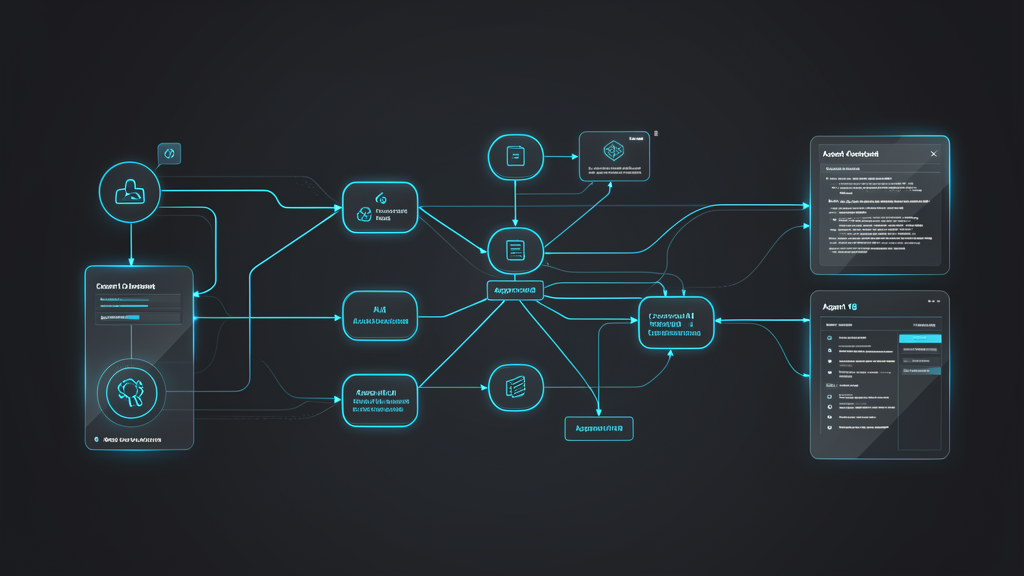
So the useful pattern is:
- Inspect the task and available data.
- Propose a plan.
- Separate safe actions from risky ones.
- Execute the approved work.
- Show exactly what changed.
- Log the result so a human can audit it later.
That sounds less sexy than "autonomous AI workforce". Good. Sexy is fun. Payroll errors are not.
The model is not the whole product
Business owners often ask which model is best. Fair question, slightly incomplete.
The better question is: what system is wrapped around the model?
A strong model inside a sloppy workflow is still sloppy. A cheaper model inside a well-designed harness can outperform it on boring operational work because the harness gives it the right context, tools, guardrails, and feedback.
This is why the agent stack matters. Memory matters. Permissions matter. Logs matter. Human approval matters. So does cost control, because an agent that burns money every time it reads a 40-page PDF is not automation. It is a very confident invoice generator.
What to automate first
Start with work that is repetitive, rules-heavy, and easy to verify.
Receipts. Follow-ups. Quote prep. Support triage. Data cleanup. Drafting replies. Moving information between systems. Summaries that feed a decision, not replace one.
Do not start with the task that would hurt badly if it went wrong. Start where a junior operator could help if they were careful, fast, and annoyingly available at 2am.
That is the sweet spot for agents now.
The takeaway
The future of business automation is not "press button, receive company that runs itself".
It is delegated work with structure: plan, approve, execute, inspect, log.
That is less cinematic, but far more useful. And useful is where the money is, darling.
Agent V8 builds around that reality. Not chatbots performing confidence tricks. Practical agents with workflows, permissions, and receipts.
Sources
- xAI News: Introducing Grok Build, https://x.ai/news/grok-build-cli
- Sebastian Raschka: Components of A Coding Agent, https://magazine.sebastianraschka.com/p/components-of-a-coding-agent
- smol.ai news: May 14 agent-first UX and infrastructure roundup, https://news.smol.ai/issues/26-05-14-not-much
- smol.ai news: GPT-Realtime-2 and browser automation roundup, https://news.smol.ai/issues/26-05-07-gpt-realtime-2